Commercial Elevator Installation: Engineering Guide
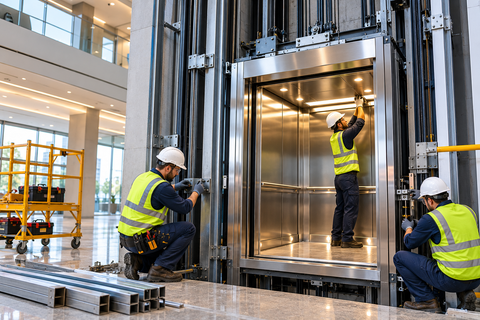
Commercial elevator installation is a critical part of modern building design and construction.
Elevators support efficient vertical transportation in offices, hotels, healthcare facilities, educational institutions, shopping centers, industrial facilities, and mixed-use developments.
A properly designed elevator system improves accessibility, traffic flow, operational efficiency, and occupant experience. Modern elevator technology combines mechanical engineering, electrical systems, automation controls, safety mechanisms, and smart building integration to provide reliable transportation throughout a structure.
As urban development continues to expand vertically, understanding commercial elevator installation principles has become increasingly important for architects, engineers, facility managers, and building owners.
Quick Facts About Commercial Elevator Installation
| Feature | Description |
|---|---|
| Primary Function | Vertical transportation |
| Common Building Types | Offices, hotels, hospitals, malls |
| Drive Technologies | Traction, Hydraulic, Machine-Room-Less |
| Control System | Microprocessor-based |
| Safety Components | Multiple redundant systems |
| Typical Capacity Range | Passenger and freight applications |
| Building Integration | Smart building compatibility |
| Energy Management | Regenerative and efficient drive systems |
Key Statistics and Industry Facts
| Metric | Industry Insight |
|---|---|
| Daily Usage | Elevators transport millions of people globally every day |
| Building Impact | Elevator systems influence building traffic efficiency |
| Energy Consumption | Modern regenerative drives improve energy efficiency |
| Safety Level | Elevators are among the most regulated building systems |
| Smart Technology | Increasing integration with intelligent building platforms |
What Is Commercial Elevator Installation?
Commercial elevator installation refers to the planning, engineering, assembly, testing, and commissioning of elevator systems within commercial buildings.
The process involves integrating mechanical equipment, structural components, electrical systems, control systems, and safety mechanisms into a complete transportation solution.
Unlike residential elevators, commercial systems are designed to accommodate higher passenger volumes, increased operating cycles, and more demanding performance requirements.
Understanding Elevator Technology
An elevator moves passengers or materials between floors using a controlled lifting mechanism. Modern systems use advanced sensors, electronic controls, and safety devices to ensure reliable operation.
The technology is designed to manage acceleration, deceleration, leveling accuracy, door operation, traffic control, and emergency response functions.
In high-occupancy buildings, elevator performance directly affects user experience and operational efficiency.
Commercial Elevator System Architecture
Commercial elevators consist of several interconnected subsystems working together.
Elevator Car
The elevator car is the passenger or freight compartment that travels between floors.
The design considers capacity, accessibility, comfort, durability, and building requirements. Materials commonly include stainless steel, glass, decorative panels, and fire-resistant components.
Hoistway
The hoistway is the vertical shaft through which the elevator travels.
It contains guide rails, safety devices, wiring systems, and mechanical equipment that support elevator movement.
Drive System
The drive system provides the force necessary to move the elevator.
Modern drives prioritize smooth operation, energy efficiency, and precise speed control.
Control System
The control system acts as the elevator's central intelligence.
It manages floor requests, travel direction, door operation, traffic management, diagnostics, and communication systems.
Safety System
Safety systems continuously monitor elevator operation.
Multiple protective devices ensure safe performance under normal and emergency conditions.
Main Elevator Components
| Component | Function |
|---|---|
| Elevator Car | Passenger transportation |
| Counterweight | Balances system load |
| Guide Rails | Direct vertical movement |
| Drive Machine | Provides lifting force |
| Controller | Manages operation |
| Door Operator | Controls door movement |
| Safety Gear | Emergency protection |
| Governor | Overspeed detection |
| Buffers | Impact protection |
| Communication System | Emergency communication |
Types of Commercial Elevators
Traction Elevators
Traction elevators use ropes and counterweights connected to a drive machine.
These systems are commonly used in medium-rise and high-rise buildings because they provide efficient operation and high travel speeds.
Advantages
- High efficiency
- Suitable for tall buildings
- Smooth operation
- Reduced energy consumption
Hydraulic Elevators
Hydraulic elevators use pressurized fluid to move the elevator car.
They are commonly used in low-rise buildings where travel distances are limited.
Advantages
- Simple design
- Reliable operation
- Suitable for lower-rise applications
Machine-Room-Less (MRL) Elevators
MRL elevators eliminate the need for a separate machine room.
The equipment is integrated within the hoistway structure.
Advantages
- Space optimization
- Flexible building design
- Improved efficiency
Freight Elevators
Freight elevators are designed for transporting materials and equipment.
They support industrial facilities, warehouses, hospitals, and logistics operations.
Elevator Technology Comparison
| Feature | Traction | Hydraulic | MRL |
|---|---|---|---|
| Building Height | Medium to High Rise | Low Rise | Medium Rise |
| Energy Efficiency | High | Moderate | High |
| Travel Speed | High | Moderate | High |
| Space Usage | Moderate | Moderate | Efficient |
| Maintenance Complexity | Moderate | Moderate | Moderate |
Commercial Elevator Installation Process
Step 1: Site Evaluation
Engineers evaluate building requirements, occupancy levels, and traffic patterns.
Step 2: System Design
Design teams determine elevator type, capacity, speed, and placement.
Step 3: Structural Preparation
The hoistway, pit, and supporting structures are prepared.
Step 4: Equipment Installation
Mechanical and electrical components are installed.
Step 5: System Integration
Control systems, communication devices, and safety equipment are connected.
Step 6: Testing and Commissioning
The elevator undergoes performance verification and safety inspections.
Installation Workflow Table
| Stage | Primary Objective |
|---|---|
| Planning | Determine project requirements |
| Design | Develop engineering specifications |
| Construction | Prepare building infrastructure |
| Installation | Assemble elevator systems |
| Integration | Connect control systems |
| Testing | Verify performance |
| Commissioning | Prepare for operation |
Technical Specifications Explained
Capacity
Capacity determines the maximum load the elevator can transport.
| Capacity Category | Typical Application |
|---|---|
| Light Capacity | Small office buildings |
| Medium Capacity | Hotels and institutions |
| High Capacity | Commercial complexes |
| Heavy Capacity | Freight applications |
Travel Speed
Travel speed affects passenger wait times and building efficiency.
| Speed Category | Typical Use |
|---|---|
| Low Speed | Low-rise buildings |
| Medium Speed | Mid-rise buildings |
| High Speed | High-rise buildings |
| Very High Speed | Premium skyscrapers |
Leveling Accuracy
Precise floor leveling improves accessibility and passenger safety.
Traffic Handling Capacity
Traffic analysis helps determine the number of elevators required.
How Does Elevator Traffic Analysis Work?
Traffic analysis estimates passenger movement throughout a building.
Key Factors
- Building occupancy
- Peak travel periods
- Floor distribution
- Waiting time targets
- Handling capacity goals
Accurate analysis helps engineers design efficient transportation systems.
Benefits and Advantages
Improved Accessibility
Elevators support movement throughout multi-story buildings.
Efficient Vertical Transportation
They reduce travel time between floors.
Enhanced Building Value
Modern transportation systems contribute to building functionality.
Smart Building Integration
Elevators increasingly communicate with building automation platforms.
Operational Efficiency
Advanced dispatch systems optimize passenger movement.
Industry Applications
Office Buildings
Support daily employee and visitor movement.
Healthcare Facilities
Transport patients, staff, and equipment.
Hotels
Facilitate guest transportation.
Educational Institutions
Improve campus accessibility.
Shopping Centers
Support customer movement across multiple levels.
Industrial Facilities
Handle personnel and materials.
Industry Applications Comparison
| Industry | Common Elevator Function |
|---|---|
| Offices | Passenger transport |
| Hospitals | Patient and equipment movement |
| Hotels | Guest transportation |
| Education | Accessibility support |
| Retail | Visitor movement |
| Industrial | Material transport |
Environmental Considerations
Commercial elevator systems increasingly support sustainable building strategies.
Energy-Efficient Drives
Modern drives reduce electricity consumption.
Regenerative Technology
Regenerative systems can recover energy during operation.
Smart Standby Modes
Equipment may reduce energy use during low-demand periods.
Sustainable Building Integration
Elevators contribute to broader environmental performance objectives.
Industry Standards and Safety
Commercial elevators operate under strict engineering and safety requirements.
Structural Safety
Systems are designed to withstand operational loads.
Emergency Braking Systems
Overspeed protection devices help prevent uncontrolled movement.
Fire Safety Integration
Elevators often interface with building emergency systems.
Accessibility Compliance
Designs support accessibility requirements for diverse users.
Inspection Requirements
Routine inspections verify continued safe operation.
Safety Systems Overview
| Safety Feature | Purpose |
|---|---|
| Governor | Detect overspeed conditions |
| Safety Gear | Emergency stopping |
| Door Sensors | Obstruction detection |
| Buffers | Impact absorption |
| Emergency Communication | Passenger assistance |
| Backup Systems | Emergency operation support |
Common Challenges and Solutions
| Challenge | Engineering Solution |
|---|---|
| Space Limitations | MRL elevator systems |
| High Traffic Demand | Advanced dispatch controls |
| Energy Consumption | Regenerative drives |
| Building Integration | Early project coordination |
| Maintenance Access | Strategic equipment placement |
| Future Expansion | Scalable system design |
Maintenance Schedule
| Maintenance Activity | Recommended Frequency |
|---|---|
| Visual Inspection | Regularly |
| Door System Check | Regularly |
| Safety Device Testing | Periodically |
| Controller Diagnostics | Periodically |
| Lubrication Tasks | As specified |
| Communication Testing | Periodically |
| Drive System Inspection | Periodically |
Best Practices for Commercial Elevator Installation
Conduct Early Traffic Analysis
Traffic planning influences long-term performance.
Coordinate With Building Design
Elevator planning should begin early in project development.
Prioritize Safety Systems
Redundant safety mechanisms improve reliability.
Consider Future Growth
Capacity planning should account for future building needs.
Support Accessibility Requirements
Accessibility should remain a core design objective.
Expert Insights
Elevator engineers often emphasize that installation success depends on balancing capacity, speed, traffic handling, energy efficiency, and long-term maintainability.
In many modern commercial developments, the most effective elevator systems are not necessarily the fastest. Instead, they are the systems that efficiently manage passenger movement while minimizing wait times and maximizing operational reliability.
The increasing use of destination dispatch systems, predictive maintenance technologies, and smart building integration continues to reshape elevator engineering across commercial construction projects.
Future Trends and Industry Insights
Smart Elevators
Artificial intelligence and analytics are improving traffic management.
Destination Dispatch Systems
Advanced algorithms optimize passenger routing.
Predictive Maintenance
Sensor technology helps identify potential issues before failures occur.
Touchless Controls
Modern systems increasingly support contactless operation.
Building Automation Integration
Elevators are becoming connected components within intelligent buildings.
Digital Monitoring
Real-time diagnostics improve operational visibility.
Frequently Asked Questions
What is commercial elevator installation?
It is the engineering and installation process used to integrate elevator systems into commercial buildings.
Which elevator type is suitable for high-rise buildings?
Traction elevators are commonly used for medium-rise and high-rise structures.
What is an MRL elevator?
A Machine-Room-Less elevator integrates equipment within the hoistway, reducing space requirements.
Why is traffic analysis important?
Traffic analysis helps determine the appropriate elevator quantity, speed, and capacity.
What safety systems do elevators use?
Commercial elevators use governors, safety gear, buffers, sensors, and communication systems.
How do regenerative drives work?
They recover energy generated during elevator operation and redirect it for beneficial use.
What factors affect elevator performance?
Capacity, speed, control systems, traffic patterns, and maintenance practices all influence performance.
What industries commonly use commercial elevators?
Office, healthcare, hospitality, retail, education, and industrial sectors all utilize elevator systems.
How does predictive maintenance help?
It uses monitoring technology to identify developing issues before major disruptions occur.
What future technologies are influencing elevators?
Artificial intelligence, touchless controls, destination dispatch systems, and smart building integration are shaping future elevator development.
Conclusion
Commercial elevator installation combines structural engineering, mechanical systems, electrical controls, automation technology, and safety design into a highly integrated transportation solution. Proper planning, traffic analysis, system selection, and installation practices help ensure reliable and efficient building operation.
As smart building technologies continue to evolve, commercial elevators are becoming more intelligent, efficient, and connected. Their role in supporting accessibility, operational efficiency, and occupant experience ensures they will remain a fundamental component of modern commercial construction.

Related Post...