Exploring Driver Monitoring: AI Safety Systems Guide
Driver monitoring systems are becoming a critical part of modern vehicle safety technology.
As vehicles gain more advanced driver assistance capabilities, ensuring that drivers remain alert, attentive, and ready to respond has become increasingly important.
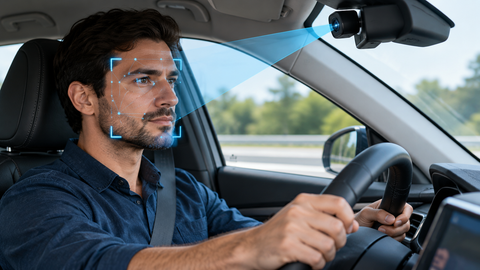
A Driver Monitoring System (DMS) uses cameras, sensors, artificial intelligence (AI), and machine learning algorithms to analyze driver behavior in real time. These systems help identify signs of fatigue, distraction, drowsiness, inattention, or unsafe driving behavior and can issue warnings when necessary. Modern AI-powered driver monitoring systems are increasingly integrated into Advanced Driver Assistance Systems (ADAS) and semi-automated driving platforms.
Quick Facts About Driver Monitoring Systems
| Feature | Description |
|---|---|
| Technology | Artificial Intelligence and Computer Vision |
| Primary Purpose | Driver Attention Monitoring |
| Key Sensors | Cameras, Infrared Sensors, Radar |
| Main Functions | Fatigue and Distraction Detection |
| Industry Usage | Passenger Vehicles and Commercial Fleets |
| Data Processing | Real-Time Analysis |
| Integration | ADAS and Vehicle Safety Systems |
| Future Direction | Multimodal AI Monitoring |
What Is a Driver Monitoring System?
A Driver Monitoring System is an in-cabin safety technology designed to evaluate a driver's alertness and attention level. Most modern systems use inward-facing cameras that track eye movements, blink rates, head position, gaze direction, and facial expressions. Some systems also analyze steering behavior, vehicle movement patterns, and physiological indicators.
The primary goal is to detect situations where the driver may be distracted, tired, or unable to respond appropriately to road conditions.
Understanding AI-Based Driver Monitoring
Artificial intelligence allows monitoring systems to recognize patterns that may indicate unsafe driving behavior.
What AI Monitors
- Eye closure duration
- Blink frequency
- Head orientation
- Gaze direction
- Facial expressions
- Driver posture
- Steering behavior
- Reaction patterns
AI models continuously compare observed behavior against learned safety patterns to determine whether intervention may be needed.
Driver Monitoring System Architecture
A modern AI driver monitoring system consists of several interconnected components.
Sensor Layer
Sensors collect information from the driver and vehicle environment.
Data Processing Layer
The processing unit converts raw sensor information into usable data.
AI Analytics Layer
Machine learning algorithms evaluate driver attention, fatigue levels, and distraction indicators.
Decision Layer
The system determines whether a warning or intervention is necessary.
Alert Layer
Warnings are delivered through visual, audio, or haptic notifications.
Driver Monitoring Architecture Overview
| System Component | Function |
|---|---|
| Infrared Camera | Face and eye tracking |
| Radar Sensor | Motion and occupancy detection |
| Microphone | Voice monitoring |
| Vehicle Sensors | Driving behavior analysis |
| AI Processor | Real-time assessment |
| Alert System | Driver notifications |
| Control Module | Safety responses |
Key Types of Driver Monitoring Systems
Camera-Based Monitoring
These systems use visible-light or infrared cameras to monitor eye movement, gaze, blinking, and head position.
Behavioral Monitoring
Behavioral systems analyze steering patterns, lane position, acceleration, and braking behavior.
Physiological Monitoring
These systems monitor biological indicators such as heart rate, brain activity, or fatigue-related signals. Research shows physiological monitoring can provide valuable insights but often requires additional sensing equipment.
Multimodal Monitoring
Multimodal systems combine multiple sensor types to improve reliability and accuracy. Many researchers consider sensor fusion a key future direction for driver safety technology.
Monitoring Technology Comparison
| Monitoring Method | Strengths | Limitations |
|---|---|---|
| Camera-Based | Non-contact monitoring | Lighting sensitivity |
| Behavioral Analysis | Uses existing vehicle data | May detect issues later |
| Physiological Monitoring | Direct driver-state measurement | Additional hardware |
| Multimodal Systems | Higher reliability | Greater complexity |
How Driver Monitoring Systems Work
Step 1: Driver Observation
Sensors continuously monitor the driver's face, eyes, and behavior.
Step 2: Data Collection
Information is collected from cameras and vehicle systems.
Step 3: AI Analysis
Algorithms evaluate distraction, fatigue, and attention levels.
Step 4: Risk Assessment
The system determines whether risk indicators exceed predefined thresholds.
Step 5: Driver Notification
Warnings are issued if attention levels decrease.
Step 6: Safety Response
Some advanced systems may coordinate with other vehicle safety technologies when necessary.
Common Driver States Detected
| Driver State | Indicators |
|---|---|
| Drowsiness | Slow blinking, eye closure |
| Distraction | Looking away from road |
| Fatigue | Head nodding, delayed responses |
| Cognitive Overload | Reduced attention patterns |
| Emotional Stress | Facial expression changes |
| Inattention | Gaze deviation |
Benefits and Advantages
Improved Road Safety
Driver monitoring helps identify potentially unsafe behavior before it becomes critical.
Enhanced Driver Awareness
Warnings can encourage drivers to refocus attention.
Support for ADAS
Modern ADAS functions depend on active driver supervision.
Reduced Accident Risk
Research consistently identifies fatigue and distraction as significant contributors to road incidents. Driver monitoring systems are designed specifically to address these risks.
Fleet Safety Management
Commercial transportation operators can use monitoring technologies to support driver safety initiatives.
Real-World Applications
Passenger Vehicles
Many modern vehicles include driver attention monitoring capabilities.
Commercial Transportation
Fleet operators use monitoring systems to support long-haul driver safety.
Public Transportation
Transit organizations can monitor driver alertness during extended operating periods.
Mining and Construction Equipment
Heavy equipment operators often work in environments where sustained attention is critical.
Autonomous and Semi-Autonomous Vehicles
Driver monitoring plays an important role in vehicles requiring human oversight during automated operation.
AI Safety Features
Eye Tracking
Monitors where drivers are looking.
Blink Detection
Identifies prolonged eye closure associated with fatigue.
Head Pose Analysis
Detects whether drivers are looking away from the roadway.
Attention Scoring
Assigns real-time attention measurements.
Predictive Risk Analysis
Emerging systems aim to predict unsafe conditions before they occur.
Important Factors to Understand
Privacy Considerations
Driver monitoring systems often process facial and behavioral information. Industry researchers continue to study privacy-preserving approaches and ethical frameworks for deployment.
Environmental Conditions
Lighting conditions, sunglasses, facial coverings, and camera placement can influence system performance.
Individual Differences
Drivers may exhibit different fatigue and distraction behaviors, creating challenges for universal AI models.
Real-World Reliability
Researchers emphasize the importance of testing systems in real driving environments rather than relying solely on controlled laboratory conditions.
Industry Standards and Safety
Driver monitoring systems are increasingly becoming part of broader vehicle safety frameworks.
Safety Objectives
- Driver attention monitoring
- Fatigue detection
- Distraction reduction
- Safe human-machine interaction
Integration with ADAS
Driver monitoring complements technologies such as:
- Lane keeping assistance
- Adaptive cruise control
- Collision warning systems
- Emergency intervention systems
Vehicle safety authorities continue to emphasize that driver assistance systems supplement, rather than replace, driver responsibility.
Challenges and Practical Solutions
| Challenge | Potential Solution |
|---|---|
| Poor Lighting | Infrared cameras |
| Sunglasses Interference | Multisensor detection |
| Privacy Concerns | On-device processing |
| False Alerts | Improved AI models |
| Driver Variability | Personalized monitoring |
| Computational Constraints | Efficient edge AI |
Key Facts and Statistics
| Fact | Insight |
|---|---|
| Human factors contribute significantly to road accidents | Driver behavior remains a major safety concern |
| Drowsiness detection is a primary DMS function | Fatigue is a recognized crash-risk factor |
| AI-driven monitoring is rapidly expanding | Modern systems increasingly use computer vision |
| Multimodal systems show growing interest | Combining sensors improves robustness |
| Driver monitoring supports automated driving | Human oversight remains important in many automation levels |
These trends are consistently highlighted in recent driver-monitoring research and industry reviews.
Best Practices for Driver Monitoring Deployment
- Use multiple sensing methods when possible.
- Prioritize privacy-conscious data handling.
- Continuously validate system performance.
- Adapt monitoring models to diverse driver populations.
- Integrate monitoring with broader vehicle safety systems.
Expert Insights
Experts increasingly view driver monitoring as a foundational technology for the future of intelligent transportation. Current research suggests that multimodal monitoring, combining cameras, vehicle data, radar, and AI-driven analysis, may provide more reliable safety assessments than single-sensor systems. Researchers also emphasize the need for explainable, privacy-preserving, and personalized monitoring approaches as vehicles become more automated.
Future Trends and Industry Insights
Multimodal Sensor Fusion
Future systems are expected to combine cameras, radar, physiological monitoring, and vehicle telemetry.
Personalized AI Models
Monitoring systems may adapt to individual driving behavior patterns.
Edge AI Processing
On-device processing can reduce latency and improve privacy.
Human-Centered Automation
AI systems will increasingly focus on collaboration between drivers and automated technologies.
Advanced Driver Assistance Integration
Driver monitoring is expected to become more closely integrated with next-generation ADAS and automated driving platforms.
Frequently Asked Questions
What is a Driver Monitoring System?
A Driver Monitoring System is an AI-powered safety technology that monitors driver attention, alertness, and behavior using cameras and sensors.
How does AI detect driver fatigue?
AI analyzes indicators such as blink rate, eye closure duration, gaze direction, and head movement patterns to identify signs of fatigue.
What is driver distraction detection?
It is the process of identifying when a driver looks away from the road or becomes inattentive.
Are driver monitoring systems part of ADAS?
Yes. Many modern driver monitoring systems are integrated with Advanced Driver Assistance Systems.
Do driver monitoring systems record video?
Many systems analyze information in real time and may not permanently store video, though implementation varies by manufacturer.
Why are infrared cameras used?
Infrared cameras can operate effectively in low-light and nighttime conditions.
Can AI predict unsafe driving behavior?
Emerging research is exploring predictive risk assessment capabilities.
What are multimodal monitoring systems?
They combine multiple sensor technologies to improve detection accuracy.
What challenges affect driver monitoring?
Privacy concerns, environmental conditions, driver variability, and computational limitations are common challenges.
What is the future of driver monitoring technology?
Future systems are expected to become more personalized, predictive, and integrated with vehicle automation technologies.
Conclusion
AI-powered driver monitoring systems are becoming a key component of modern vehicle safety. By analyzing driver attention, fatigue, distraction, and behavior in real time, these systems help support safer driving environments and complement advanced driver assistance technologies.
As artificial intelligence, sensor technology, and automated driving systems continue to evolve, driver monitoring is expected to play an even greater role in improving transportation safety, reducing human-error-related incidents, and enabling more intelligent human-machine collaboration within vehicles.

Related Post...