Wedding Venue Selection Explained: Planning, Types and Key Factors
Wedding venue selection is one of the most important decisions in the wedding planning process.
The venue influences the event atmosphere, guest experience, logistics, photography opportunities, catering arrangements, and overall celebration flow. Choosing the right location helps create a comfortable environment while supporting the couple’s vision, budget, and guest requirements.
Modern weddings take place in a wide variety of settings, including banquet halls, hotels, resorts, gardens, beaches, heritage properties, and private estates. As wedding expectations continue to evolve, venue selection has become a strategic planning process that balances aesthetics, functionality, accessibility, and guest convenience.
Understanding how wedding venues differ and what factors influence venue suitability can help couples make informed decisions and avoid common planning challenges.
Quick Overview
| Aspect | Details |
|---|---|
| Purpose | Provides the location for wedding ceremonies and celebrations |
| Common Types | Banquet halls, hotels, resorts, gardens, beaches, heritage venues |
| Key Factors | Capacity, location, accessibility, facilities, budget, weather |
| Main Benefits | Organization, guest comfort, event coordination |
| Planning Importance | Influences logistics, décor, catering, and photography |
| Typical Timeline | Often selected 6–18 months before the wedding |
| Modern Trends | Sustainable venues, destination weddings, personalized experiences |
Industry Overview
The wedding venue industry is a major component of the global wedding and hospitality sectors. Venues support various event functions, including ceremonies, receptions, dining experiences, entertainment programs, and guest accommodations.
As wedding celebrations become more personalized, venue providers have expanded their offerings to include customizable layouts, integrated event coordination, technology-enabled planning tools, and flexible indoor-outdoor spaces.
The industry serves couples across different cultures, traditions, and budget ranges, making venue selection a critical step in event planning.
How Wedding Venue Selection Works
Step 1: Define Wedding Requirements
Identify:
- Guest count
- Preferred location
- Wedding style
- Cultural requirements
- Desired event experience
Step 2: Establish a Budget
Determine the portion of the wedding budget allocated to:
- Venue rental
- Catering
- Decorations
- Accommodation
- Transportation
Step 3: Create a Venue Shortlist
Research venues that match:
- Capacity needs
- Location preferences
- Event style
- Available dates
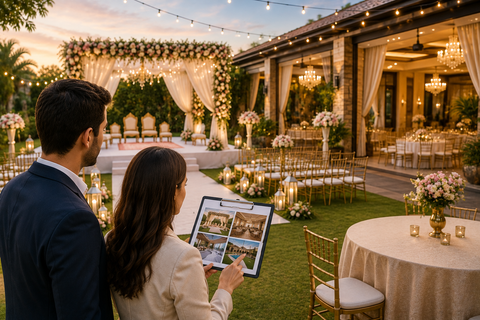
Step 4: Schedule Site Visits
Evaluate:
- Layout
- Facilities
- Accessibility
- Parking
- Lighting conditions
Step 5: Compare Options
Assess advantages and limitations of each venue.
Step 6: Review Agreements
Carefully review:
- Policies
- Inclusions
- Restrictions
- Scheduling requirements
Step 7: Confirm Booking
Secure the venue and begin detailed event planning.
Main Types of Wedding Venues
1. Banquet Halls
Definition
Purpose-built indoor event facilities.
Features
- Climate-controlled environment
- Flexible seating layouts
- Event support facilities
Applications
- Traditional weddings
- Large guest gatherings
Advantages
- Weather protection
- Operational convenience
Limitations
- Limited natural scenery
2. Hotels
Definition
Wedding facilities integrated within hospitality properties.
Features
- Accommodation access
- Event spaces
- Catering infrastructure
Applications
- Multi-day celebrations
- Guest-friendly weddings
Advantages
- Convenience
- Centralized management
Limitations
- Scheduling limitations during peak seasons
3. Resorts
Definition
Destination-oriented hospitality venues.
Features
- Leisure facilities
- Scenic surroundings
- Accommodation options
Applications
- Destination weddings
Advantages
- Extended guest experience
Limitations
- Travel coordination requirements
4. Garden Venues
Definition
Outdoor spaces surrounded by landscaping and greenery.
Features
- Natural beauty
- Open-air atmosphere
Applications
- Daytime ceremonies
- Seasonal celebrations
Advantages
- Attractive photography opportunities
Limitations
- Weather dependency
5. Beach Venues
Definition
Coastal wedding locations.
Features
- Ocean views
- Relaxed environment
Applications
- Destination events
Advantages
- Memorable scenery
Limitations
- Weather and environmental conditions
6. Heritage Properties
Definition
Historic estates, palaces, or culturally significant locations.
Features
- Architectural character
- Traditional ambiance
Applications
- Formal celebrations
Advantages
- Unique atmosphere
Limitations
- Operational restrictions
Core Components of a Wedding Venue
Event Space
Supports ceremonies, receptions, and guest activities.
Guest Capacity
Determines the maximum number of attendees.
Accessibility
Ensures convenient entry and movement for guests.
Catering Facilities
Supports food preparation and dining operations.
Parking and Transportation
Facilitates guest arrivals and departures.
Accommodation
Provides lodging options when required.
Technical Infrastructure
Includes:
- Lighting
- Sound systems
- Internet connectivity
- Presentation equipment
Wedding Venue Comparison Table
| Venue Type | Capacity | Weather Protection | Accommodation | Scenic Value | Flexibility |
| Banquet Hall | High | Excellent | Limited | Moderate | High |
| Hotel | High | Excellent | Excellent | Moderate | High |
| Resort | Medium-High | Good | Excellent | High | High |
| Garden | Medium | Low | Limited | High | Moderate |
| Beach | Medium | Low | Variable | Very High | Moderate |
| Heritage Property | Variable | Good | Variable | High | Moderate |
Real-World Applications
Hospitality Sector
Hotels and resorts host weddings alongside accommodation and dining activities.
Tourism Industry
Destination weddings contribute to regional tourism and local economies.
Event Management
Wedding planners coordinate venue operations, logistics, and guest experiences.
Photography and Media
Venue selection directly influences visual storytelling and event documentation.
Catering Industry
Venue facilities impact menu planning and food service operations.
Real-World Examples
Resort Wedding
A couple hosts a multi-day celebration where guests stay on-site, simplifying transportation and scheduling.
Garden Ceremony
An outdoor venue provides a natural setting for daytime photography and open-air celebrations.
Heritage Venue Event
Historic architecture creates a culturally rich environment for traditional ceremonies.
Hotel-Based Wedding
Accommodation, dining, and event functions operate within a single property, improving convenience for attendees.
Key Features of Modern Wedding Venues
Flexible Layouts
Allow customized seating and event designs.
Indoor and Outdoor Spaces
Support multiple event formats.
Guest Amenities
Improve attendee comfort and convenience.
Technology Integration
Supports presentations, entertainment, and communication.
Event Coordination Support
Assists with scheduling and logistics.
Customization Options
Accommodates different cultural and personal preferences.
Benefits of Careful Venue Selection
Operational Benefits
- Better event organization
- Improved coordination
Performance Benefits
- Smoother event execution
- Reduced logistical issues
Efficiency Benefits
- Simplified planning
- Better resource management
Guest Benefits
- Comfort
- Accessibility
- Positive experience
Long-Term Advantages
- Memorable event outcomes
- Improved event satisfaction
Challenges and Limitations
Availability Constraints
Popular venues may have limited dates.
Capacity Restrictions
Some locations cannot accommodate large guest lists.
Weather Risks
Outdoor venues may require contingency plans.
Accessibility Issues
Remote locations may create transportation challenges.
Vendor Restrictions
Some venues have approved supplier requirements.
Budget Management
Additional costs may arise from transportation, décor, or accommodations.
Selection Factors
When evaluating wedding venues, consider:
- Guest capacity
- Geographic location
- Accessibility
- Parking availability
- Venue reputation
- Indoor and outdoor options
- Weather preparedness
- Accommodation availability
- Technical facilities
- Catering flexibility
- Photography opportunities
- Safety considerations
- Event schedule requirements
- Cultural compatibility
- Overall value
Standards, Regulations, and Best Practices
Safety Compliance
Venues should follow local safety regulations.
Occupancy Requirements
Guest numbers should remain within approved capacity limits.
Accessibility Standards
Facilities should accommodate diverse guest needs.
Emergency Preparedness
Venues should maintain emergency procedures and evacuation plans.
Contract Transparency
Written agreements help clarify responsibilities and expectations.
Venue Management and Optimization
Conduct Early Planning
Reserve venues well in advance.
Maintain Communication
Coordinate regularly with venue representatives.
Create Backup Plans
Prepare alternatives for weather or operational disruptions.
Schedule Site Reviews
Conduct walkthroughs before the event.
Coordinate Vendors
Ensure all suppliers understand venue requirements.
Emerging Technologies and Innovations
Virtual Venue Tours
Allow remote venue evaluation.
Digital Planning Platforms
Support scheduling and coordination.
Smart Event Management
Improves communication between stakeholders.
Interactive Guest Experiences
Enhance attendee engagement.
Data-Based Planning
Helps optimize event logistics and capacity planning.
Future Trends
Sustainable Wedding Venues
Growing focus on environmentally responsible operations.
Personalized Experiences
Couples increasingly seek unique venue concepts.
Hybrid Event Support
Some venues integrate digital participation options.
Technology-Enhanced Planning
Advanced planning tools continue improving coordination.
Destination Wedding Growth
Travel-based celebrations remain popular across many regions.
Expert Insights
Wedding venue selection extends beyond aesthetics. A successful venue balances guest comfort, logistics, accessibility, event flow, and long-term planning objectives. As wedding expectations evolve, venues increasingly combine hospitality, technology, and customization to create flexible celebration environments. Careful evaluation of venue capabilities helps reduce planning challenges while improving the overall event experience.
Frequently Asked Questions
1. Why is wedding venue selection important?
The venue influences logistics, guest experience, décor possibilities, and event coordination.
2. How early should a venue be selected?
Many couples begin searching 6–18 months before the wedding date.
3. What is the first factor to consider?
Guest count is typically one of the most important starting points.
4. Are outdoor venues suitable for all seasons?
Not always. Weather conditions should be carefully evaluated.
5. What makes a venue guest-friendly?
Accessibility, comfort, parking, accommodations, and clear navigation.
6. Why are site visits important?
They help assess facilities, layout, and practical event requirements.
7. What are destination wedding venues?
They are venues located away from the couple's home region and often include travel arrangements.
8. How does venue capacity affect planning?
Capacity influences seating, safety, dining, and event flow.
9. What technology features are useful in modern venues?
Lighting systems, audio equipment, connectivity, and event management tools.
10. Should venue agreements be reviewed carefully?
Yes. Policies, inclusions, and restrictions should be fully understood.
11. What are common challenges with outdoor weddings?
Weather uncertainty, environmental conditions, and logistical requirements.
12. Why is accessibility important?
It improves convenience and inclusivity for all guests.
13. What role does accommodation play?
It supports guest comfort, especially for multi-day events.
14. How do venues impact photography?
Lighting, scenery, architecture, and layout influence image quality.
15. What future trend is shaping venue selection?
Personalization combined with sustainable event planning is becoming increasingly important.
Key Takeaways
- Wedding venue selection influences every aspect of event planning.
- Capacity should align with guest attendance expectations.
- Venue type affects atmosphere and logistics.
- Accessibility contributes to guest satisfaction.
- Site visits help identify practical considerations.
- Weather planning is essential for outdoor venues.
- Technology is becoming more integrated into event spaces.
- Contracts should be reviewed thoroughly.
- Sustainable venues are gaining attention.
- Destination weddings continue to grow in popularity.
- Venue flexibility supports personalized celebrations.
- Early planning improves venue availability.
Conclusion
Wedding venue selection is a foundational part of creating a successful wedding experience. The chosen venue affects guest comfort, event operations, photography, catering, scheduling, and overall atmosphere. By evaluating venue types, facilities, accessibility, capacity, and long-term planning considerations, couples can make informed decisions that support their goals and preferences. As the wedding industry continues to evolve through technology, sustainability, and personalization, venue selection remains a critical factor in delivering memorable and well-organized celebrations.

Related Post...

Villa Rental Destinations: The Complete Guide to Luxury, Family, and Eco-Friendly Escapes
Updated: October 14, 2026
Read More
Wedding Venue Selection Explained: Planning, Types and Key Factors
Updated: October 17, 2026
Read More