Sod Installation: Complete Guide to Creating a Healthy and Beautiful Lawn
Sod installation is the process of laying sections of mature grass, including its roots and a thin layer of soil, over prepared ground to establish a new lawn.
It provides immediate grass coverage compared with seeding, but successful establishment depends on proper soil preparation, suitable grass selection, careful installation, adequate watering, and ongoing lawn maintenance.
Sod is used for residential lawns, commercial landscapes, parks, and other outdoor spaces. Choosing the right grass for the local climate, sunlight, soil conditions, and intended use helps create a lawn that develops strong roots and remains healthy over time.
Quick Facts About Sod Installation
Feature | Details |
|---|---|
Primary purpose | Establish a grass lawn using mature turf |
Common applications | Residential yards, commercial landscapes, parks |
Main materials | Sod rolls or slabs, prepared soil, water |
Essential preparation | Remove existing vegetation, correct grading, prepare soil |
Main establishment requirement | Consistent moisture during root development |
Common grass categories | Cool-season and warm-season grasses |
Important selection factors | Climate, sunlight, soil, drainage, foot traffic |
Initial maintenance priorities | Watering, root establishment, weed monitoring |
Main limitation | Higher initial material and installation requirements than seeding |
Long-term objective | A rooted, dense, healthy lawn suited to its environment |
What Is Sod Installation?
Sod installation involves placing pre-grown turf over prepared soil to establish a lawn. Sod is produced by growing grass until its roots form a cohesive layer that can be harvested and transported. Depending on the supplier and production method, it may arrive in rolls, slabs, or other manageable sections.
Once installed, the grass must develop roots into the underlying soil. Although the lawn appears green immediately, it is not fully established simply because the turf has been laid. Root contact, soil moisture, temperature, and proper aftercare determine how successfully it becomes integrated with the ground.
Why Proper Sod Installation Matters
The quality of a newly installed lawn depends on more than the appearance of the turf at delivery. Poor soil preparation, delayed installation, gaps between sections, or inconsistent watering can lead to weak rooting, dry patches, uneven growth, and premature turf loss.
A carefully planned installation helps the grass establish evenly and reduces avoidable maintenance problems.
Consistent coverage: Closely fitted sod sections create a more uniform lawn surface.
Root development: Proper soil contact encourages roots to grow into the prepared ground.
Erosion control: Established turf can help stabilize soil, provided it is appropriately installed and maintained.
Landscape appearance: Sod creates an immediate green surface without waiting for grass seed to germinate.
Reduced exposure of bare soil: Prompt installation limits the period during which prepared ground remains uncovered.
Predictable lawn planning: Grass type and turf quality can be assessed before installation.
Sod does not eliminate the need for weed management, irrigation, mowing, or soil improvement. Its long-term performance still depends on the growing environment.
Understanding the Sod Installation Process
Simple Explanation
Think of sod as a living layer of grass that needs to connect with the soil beneath it. The existing ground is prepared so that roots can make close contact with the soil, and the turf sections are placed together to create continuous coverage.
Water keeps the grass and underlying soil moist while new roots develop. As the roots extend into the ground, the turf becomes more firmly anchored and can gradually be managed like an established lawn.
The central principle is to create a suitable growing environment before laying the grass and then maintain conditions that support root establishment.
How Sod Installation Works: Step-by-Step Process
Step 1: Assess the Lawn Area
Examine the site before preparing the ground. Identify areas with full sun, partial shade, compacted soil, poor drainage, tree roots, or existing weeds. Consider how the lawn will be used, including foot traffic, pets, play areas, and landscape features.
Measure the installation area to estimate the amount of sod required. Include irregular sections and allow for careful trimming, while avoiding excessive surplus. Check access routes for delivery and confirm that water is available before the turf arrives.
Step 2: Remove Existing Grass and Weeds
Remove existing turf, weeds, unwanted vegetation, and debris that could interfere with root contact. Depending on the site, this may involve mechanical removal or other appropriate vegetation-management methods.
Avoid burying persistent weeds or thick layers of dead vegetation beneath the new lawn. Where invasive weeds are present, address them before installation so they do not compete with the new grass.
Step 3: Test and Prepare the Soil
Assess soil texture, drainage, compaction, and nutrient conditions. A soil test can help determine whether amendments are necessary and whether the soil pH is appropriate for the selected grass.
Loosen compacted soil where needed and incorporate recommended amendments into the relevant soil layer. Avoid adding fertilizer or lime automatically; the need and application rate should follow soil conditions and the selected turfgrass requirements.
Step 4: Grade and Level the Surface
Establish a smooth, stable surface with appropriate drainage away from buildings. Remove large stones, break up clods, and fill depressions that could collect water.
The ground should not be excessively loose or deeply uneven. A firm, prepared seedbed-like surface allows the sod roots to contact the soil without creating a bumpy lawn or obstructing drainage.
Step 5: Lay the Sod
Begin along a straight edge, such as a walkway or property boundary. Place each section tightly against the previous one, staggering joints between adjacent rows in a brick-like pattern.
Avoid overlapping sections or leaving open gaps. Fit the turf closely around landscape features, and minimize walking on newly laid sod to prevent shifting or creating depressions.
Step 6: Roll and Water the Lawn
Where appropriate for the soil and turf condition, lightly roll the installed lawn to improve contact between the sod and the underlying ground. Avoid excessive rolling, especially when the soil is wet or easily compacted.
Water promptly after installation so the turf and the soil beneath it become moist. The objective is to prevent the root layer from drying while avoiding prolonged waterlogging.
Step 7: Monitor Root Establishment
Check moisture frequently during the initial establishment period. Newly installed sod has limited root contact with the underlying soil, so it can dry out faster than an established lawn.
As roots develop, adjust irrigation according to soil moisture, weather, grass type, and drainage. Avoid heavy traffic until the turf resists gentle lifting and is securely rooted.
Sod Installation Workflow Table
Stage | Main Activity | Desired Result |
|---|---|---|
Site assessment | Evaluate sunlight, soil, drainage, and use | Appropriate grass and installation plan |
Ground clearance | Remove existing vegetation and debris | Clean installation surface |
Soil preparation | Address compaction and soil deficiencies | Suitable root zone |
Grading | Create a smooth surface with suitable drainage | Even lawn and fewer waterlogged areas |
Sod placement | Fit sections closely and stagger joints | Continuous grass coverage |
Initial watering | Moisten turf and underlying soil | Reduced risk of drying |
Root establishment | Monitor moisture and root contact | Firmly anchored lawn |
Ongoing care | Adjust mowing, irrigation, and nutrition | Healthy long-term growth |
Construction and Materials Required for Sod Installation
Sod Rolls or Turf Slabs
Sod consists of living grass, roots, and a thin layer of soil or growing medium held together during harvesting. The turf should be fresh, reasonably uniform, free from major weed infestations, and suitable for the intended site.
Inspect the grass for discoloration, dry edges, visible disease symptoms, and damaged root material. Turf quality can vary with species, growing conditions, harvesting methods, and storage.
Prepared Topsoil
The existing soil often provides the main root zone, but topsoil or suitable amendments may be needed where the site has shallow, poor-quality, or heavily disturbed soil. The goal is a suitable rooting environment rather than simply adding as much topsoil as possible.
The soil should support water infiltration, drainage, nutrient availability, and root penetration. Imported soil should be evaluated for texture, contamination concerns, and compatibility with the existing ground.
Soil Amendments
Compost and other amendments may improve certain soil properties when used appropriately. Their suitability depends on the existing soil, organic matter content, drainage, and the needs of the grass.
Excessive amendments or poorly matched soil layers can create drainage and rooting problems. Soil testing and site assessment should guide the choice and amount of material.
Irrigation Equipment
A hose, sprinkler, or installed irrigation system can provide the water required for establishment. Coverage should be reasonably uniform, including edges, corners, slopes, and areas near structures.
Automatic irrigation can help manage watering schedules, but settings must be adjusted for rainfall, temperature, soil conditions, and the turf's stage of development.
Installation Tools
Common tools include a rake, shovel, wheelbarrow, measuring tape, sharp turf knife, and lawn roller where appropriate. Larger installations may require grading equipment, soil preparation machinery, or specialized turf-handling equipment.
Tools should be chosen according to site size and soil conditions. Heavy machinery should not be used on excessively wet soil because it can cause compaction and uneven ground.
Main Materials and Requirements for Sod Installation
Material or Tool | Purpose | Important Consideration |
|---|---|---|
Fresh sod | Provides established grass and roots | Grass type, freshness, and quality |
Topsoil | Supports root development where needed | Compatibility with existing soil |
Soil amendments | Correct specific soil limitations | Use according to soil assessment |
Rake and shovel | Prepare and level the surface | Avoid creating excessive looseness |
Turf knife | Trim sections around edges | Make close, clean cuts |
Lawn roller | Improve soil-to-sod contact where appropriate | Avoid compacting wet soil |
Hose or sprinkler | Supply establishment water | Uniform coverage and controllable flow |
Soil test | Assess pH and nutrient conditions | Follow relevant recommendations |
Measuring tools | Estimate the area and material needs | Account for the shape of the site |
Types of Sod and Turfgrass
Sod is often classified by the grass species used to produce it. The most suitable type depends on climate, seasonal temperatures, sunlight, water availability, soil, and expected lawn use.
Cool-Season Grass Sod
Cool-season grasses generally grow most actively during cooler periods and may struggle during prolonged heat without appropriate moisture and care.
Common examples include:
Tall fescue
Kentucky bluegrass
Perennial ryegrass
Fine fescues
Tall fescue is used in many lawns where its heat tolerance and deeper rooting are useful. Kentucky bluegrass can form a dense lawn under suitable conditions, while perennial ryegrass is known for relatively rapid establishment. Fine fescues include species that can suit certain lower-maintenance or shaded settings.
The performance of each grass depends on the cultivar, climate, soil, and maintenance practices.
Warm-Season Grass Sod
Warm-season grasses generally grow most actively in warm weather and may become dormant or lose color during cooler periods.
Common examples include:
Bermudagrass
Zoysiagrass
St. Augustinegrass
Centipedegrass
Buffalograss
Bermudagrass is commonly used in sunny areas with substantial activity. Zoysiagrass can form a dense turf under suitable conditions, while St. Augustinegrass is used in some warm-climate lawns where its shade tolerance relative to certain other warm-season grasses is useful.
These grasses differ in drought tolerance, cold sensitivity, growth habits, and maintenance needs.
Grass Mixtures and Blends
Some sod products contain multiple cultivars or grass species to balance characteristics such as appearance, disease resistance, and adaptation to varying site conditions. A mixture combines different species, while a blend commonly combines cultivars of the same species.
The composition should be appropriate for the climate and intended use. A mixture designed for one region may perform poorly in another, so grass identity and growing requirements should be confirmed before installation.
Sod Type Comparison Table
Grass Type | General Climate Preference | Common Strength | Main Consideration |
|---|---|---|---|
Tall fescue | Cool-season or transitional climates | Adaptability and deeper rooting | Performance varies by cultivar and heat conditions |
Kentucky bluegrass | Cool-season climates | Dense turf and recovery from some forms of damage | May require substantial care in hot, dry periods |
Perennial ryegrass | Cool-season climates | Relatively rapid establishment | Heat and drought tolerance vary |
Fine fescues | Cool-season climates | Suitability for some shaded or lower-input settings | Traffic tolerance differs by species |
Bermudagrass | Warm climates | Strong growth in sunny, active areas | Often performs poorly in substantial shade |
Zoysiagrass | Warm climates | Dense growth under suitable conditions | Establishment and recovery can be relatively slow |
St. Augustinegrass | Warm climates | Useful in some lawns with partial shade | Cold tolerance and disease resistance vary |
Buffalograss | Suitable dry, warm or continental settings | Adaptation to certain lower-water landscapes | Not suitable for every climate or high-traffic use |
Sod Installation vs. Grass Seeding
Sod installation and grass seeding both establish lawns, but they differ in the time required for visible coverage, the preparation process, and the early maintenance demands. The right method depends on the project timeline, grass species, soil conditions, and available resources.
Feature | Sod Installation | Grass Seeding |
|---|---|---|
Initial appearance | Immediate grass coverage | Bare soil until germination and growth |
Establishment | Roots must grow into the underlying soil | Seeds must germinate, develop, and establish roots |
Erosion control | Provides surface coverage quickly when properly installed | Soil may remain exposed during early growth |
Initial preparation | Requires grading and soil preparation | Also requires a suitable seedbed |
Grass selection | Limited to turf types available from suppliers | Often provides a broader range of seed mixtures |
Early weed pressure | Depends on turf quality and site conditions | Bare soil can provide opportunities for weed growth |
Timing considerations | Turf must be installed promptly after delivery | Seeding depends on suitable germination conditions |
Early watering | Needed to maintain moisture and support root development | Needed to support germination and young seedlings |
Traffic tolerance | Requires protection until rooted | Usually requires protection during establishment |
Main limitation | Material handling and prompt installation requirements | Slower coverage and potentially greater early exposure to weeds |
Sod is useful when immediate surface coverage is important. Seeding may be appropriate when the project allows more time for establishment or when a suitable seed mixture is preferred. Neither method guarantees success without appropriate soil preparation and follow-up care.
Benefits and Advantages of Sod Installation
Immediate Green Coverage
Sod creates a visibly green lawn as soon as it is installed. This can be useful when completing a landscape project, covering exposed soil, or improving the appearance of a newly developed outdoor area.
Faster Surface Stabilization
Because sod provides an existing grass cover, it can help stabilize prepared soil more quickly than newly sown grass. Its effectiveness depends on proper installation, root development, slope conditions, and rainfall or irrigation.
More Predictable Initial Appearance
The grass species and general appearance can be inspected before installation. This makes it easier to plan the visual character of a lawn than relying entirely on the eventual appearance of a newly seeded area.
Reduced Initial Germination Concerns
Sod does not require seed germination to create visible coverage. However, it remains vulnerable to drying, poor soil contact, disease, and unsuitable growing conditions until its roots become established.
Flexible Landscape Design
Sod can be fitted around paths, garden beds, trees, and other landscape features. Careful measuring and trimming help produce a continuous lawn surface without unnecessary gaps or overlaps.
Residential and Commercial Applications of Sod Installation
Residential Lawns
Homeowners use sod to establish front lawns, backyard grass areas, garden borders, and outdoor recreational spaces. Grass selection should reflect local conditions, the amount of sunlight, expected foot traffic, and the time available for maintenance.
Commercial Landscapes
Offices, retail properties, residential developments, and other commercial sites may use sod to establish landscaped areas quickly. Site access, irrigation coverage, maintenance planning, and pedestrian use are important considerations.
Parks and Recreational Areas
Public green spaces and recreational lawns may require grass that tolerates repeated use. The appropriate species depends on local climate, soil conditions, maintenance capacity, and the type of activity expected.
Newly Constructed Properties
Construction can leave compacted soil, uneven grades, and debris that interfere with turf establishment. Proper site restoration should precede sod installation, including drainage correction and soil preparation where necessary.
Slopes and Erosion-Prone Areas
Sod can provide useful surface protection on suitable slopes, but it must be installed in a way that prevents movement and supports root establishment. Steep or unstable slopes may require specialized erosion-control measures or professional landscaping assessment.
Sod Installation Applications Table
Application | Main Objective | Key Planning Factor |
|---|---|---|
Residential lawn | Create a usable, attractive grass area | Sunlight, traffic, and maintenance |
Commercial landscape | Establish consistent green coverage | Site access and irrigation |
Park and recreation area | Support outdoor use | Grass durability and recovery |
New construction | Restore disturbed landscape areas | Soil compaction and grading |
Sloped ground | Stabilize the soil surface | Slope stability and erosion control |
Garden transitions | Connect grass with landscape features | Accurate trimming and edge design |
Best Time to Install Sod
The most suitable installation period depends on the selected grass species and the local climate. Cool-season grasses generally establish well during periods of moderate temperatures, often in early autumn or spring. Warm-season grasses commonly establish most readily during warm weather when active growth supports root development.
Avoid conditions that place excessive stress on the turf, such as extreme heat without reliable irrigation, frozen ground, or saturated soil that cannot support proper preparation. Sod may be installed outside the ideal seasonal window in some climates, but additional planning and aftercare may be necessary.
Before arranging delivery, confirm that the soil is prepared and that irrigation is available. Freshly harvested sod should be installed promptly because prolonged storage can cause heating, moisture loss, and deterioration.
Industry Standards, Environmental Considerations, and Safety
Sod installation does not generally rely on a single universal installation standard. Local water-use rules, erosion-control requirements, pesticide regulations, and landscape specifications may apply depending on the location and project.
Soil and Water Management
Soil testing helps identify pH and nutrient issues before amendments are applied. Irrigation should provide enough moisture for root establishment without creating runoff, prolonged saturation, or unnecessary water consumption.
Fertilizer and Chemical Use
Fertilizer requirements depend on the soil test, grass species, and establishment conditions. Excessive fertilizer can damage young turf, contribute to nutrient runoff, or encourage growth that the developing root system cannot support.
Weed-control products must be appropriate for the grass species and installation stage. Some treatments can injure newly laid turf, so product directions and applicable local requirements should be followed.
Safe Site Preparation
Ground preparation may involve sharp tools, heavy rolls of turf, powered equipment, and lifting. Use suitable protective equipment, safe lifting methods, and appropriate machinery procedures. Larger projects or sites with drainage problems may require a qualified landscaping or soil professional.
Environmental Suitability
Grass selection affects irrigation demand, mowing requirements, and the ability of a lawn to withstand local weather. A species adapted to the climate and site conditions is generally more practical than attempting to maintain unsuitable grass through intensive irrigation and other inputs.
Common Sod Installation Challenges and Solutions
Challenge | Likely Cause | Practical Approach |
|---|---|---|
Brown or dry patches | Inadequate moisture or poor root contact | Check moisture beneath the turf and correct uneven watering |
Yellowing grass | Root stress, nutrient issues, or unsuitable conditions | Assess watering, soil, and grass requirements before treatment |
Gaps between sections | Poor placement or shrinkage during drying | Fit sections closely and correct gaps with suitable turf |
Uneven lawn surface | Inadequate grading or soil settlement | Correct surface irregularities when conditions permit |
Water pooling | Poor drainage, compaction, or incorrect grading | Assess drainage and correct underlying site problems |
Sod lifting easily | Roots have not established | Limit traffic and review soil contact and moisture |
Weed growth | Existing weeds or seeds in the soil | Identify the weeds and use an appropriate management approach |
Turf deterioration before laying | Delayed installation or poor storage | Prepare the site in advance and install fresh sod promptly |
Weak growth in shade | Grass species poorly matched to available light | Select a suitable grass or reassess the landscape design |
Erosion on slopes | Runoff, steep gradients, or insufficient anchoring | Evaluate slope conditions and use appropriate stabilization methods |
The same symptom can have several causes. For example, brown grass may result from insufficient water, excessive water, root damage, disease, or poor soil contact. Check the actual conditions before applying fertilizer, pesticides, or additional irrigation.
How to Choose the Right Sod
Choosing sod requires matching the grass to the site rather than selecting only by color or appearance. Review the climate, expected use, soil conditions, sunlight, irrigation capacity, and maintenance requirements before deciding.
Selection Factor | What to Evaluate | Why It Matters |
|---|---|---|
Climate | Seasonal heat, cold, and rainfall | Determines grass adaptation |
Sunlight | Full sun, partial shade, or dense shade | Influences growth and turf density |
Soil | Texture, pH, nutrients, and compaction | Affects root development |
Drainage | Water infiltration and pooling | Reduces root stress |
Foot traffic | Occasional use or frequent activity | Determines durability requirements |
Water availability | Irrigation coverage and local restrictions | Influences establishment and long-term care |
Maintenance capacity | Mowing, watering, and seasonal care | Helps match grass to available time |
Turf quality | Freshness, root condition, uniformity, and weeds | Affects establishment potential |
Site dimensions | Area, shape, slopes, and obstacles | Supports accurate material planning |
Installation timing | Weather and grass growth cycle | Influences rooting success |
For a sunny recreational lawn, a grass with suitable wear tolerance may be appropriate. For a shaded area, a shade-adapted species or a revised landscape plan may be more practical. In water-limited environments, choose a locally adapted grass and consider whether a smaller lawn or alternative ground cover better suits the site.
Maintenance Best Practices After Sod Installation
Water Consistently During Establishment
Keep the sod and the underlying soil sufficiently moist while roots develop. Check moisture beneath the surface instead of judging only by the grass color. Adjust watering for rainfall, temperature, wind, soil type, and drainage.
Avoid allowing the root layer to dry out, but do not keep the ground continuously saturated. Excess water can reduce soil aeration and encourage root problems.
Limit Foot Traffic
Avoid unnecessary walking, furniture placement, sports, and heavy equipment on newly installed sod. Movement can shift turf sections, compress the soil, and disrupt developing roots.
Resume normal use gradually once the turf is firmly anchored and growth indicates successful establishment.
Mow at the Appropriate Time
Wait until the grass has rooted sufficiently and is tall enough for mowing according to its species-specific requirements. The first mowing should use a sharp blade and avoid removing too much leaf tissue at once.
Do not mow when the soil is saturated or when equipment would leave ruts in the new lawn.
Apply Nutrients Based on Need
Use soil-test information and the grass's requirements to determine whether additional nutrients are necessary. Excessive fertilizer can stress young turf and contribute to runoff.
Follow the product instructions and local environmental requirements when applying fertilizers or other lawn treatments.
Monitor Weeds, Pests, and Disease
Inspect the lawn for unusual discoloration, thinning, pests, and weed growth. Correct watering, mowing, drainage, or soil issues where they contribute to the problem.
If symptoms spread quickly or the cause is unclear, seek guidance from a qualified turf or landscaping professional before applying treatments.
Adjust Care Through the Seasons
Established lawns need different maintenance as temperatures and growth patterns change. Adjust irrigation, mowing frequency, and seasonal care to the grass type and local conditions rather than following a fixed schedule throughout the year.
Limitations of Sod Installation
Although sod provides immediate coverage, it has limitations that should be considered before planning a lawn project.
Root establishment is still necessary: The turf can dry out, shift, or deteriorate before roots connect with the underlying soil.
Grass selection may be limited: Available species and cultivars depend on regional growing conditions and supplier production.
Installation timing matters: Fresh turf must be handled and installed promptly.
Soil problems remain relevant: Sod cannot correct severe compaction, poor drainage, or unsuitable soil by itself.
Water is essential during establishment: Newly laid turf requires careful moisture management, particularly in warm or dry weather.
Maintenance continues after installation: Mowing, irrigation, nutrient management, and weed control remain necessary.
Poor installation can create hidden problems: Uneven grading, buried debris, and inadequate soil preparation can affect the lawn long after it appears green.
Sod is not automatically the most appropriate option for every site. Seeding, alternative ground covers, or a redesigned landscape may be more suitable depending on climate, water availability, project goals, and maintenance capacity.
Future Trends in Sod Installation and Lawn Management
Climate-Adapted Turfgrass
Grass selection is increasingly influenced by changing weather patterns, local water availability, and seasonal temperature extremes. Turfgrass varieties developed for particular climates can help landscapes remain functional with more appropriate irrigation and maintenance practices.
Water-Efficient Irrigation
Improved irrigation controls, soil-moisture monitoring, and weather-responsive scheduling can help reduce unnecessary watering. These approaches are most useful when paired with suitable grass selection, effective drainage, and regular inspection of irrigation coverage.
Soil Health and Sustainable Landscaping
Greater attention to soil structure, organic matter, and nutrient management can support healthier root systems. Soil testing and targeted amendments help avoid unnecessary inputs and allow lawn care decisions to reflect actual site conditions.
Alternatives to Traditional Grass Lawns
In areas where irrigation is restricted or lawn maintenance is difficult, homeowners and landscape planners may consider native ground covers, regionally adapted plants, or reduced lawn areas. These alternatives can complement sod in places where conventional turf is poorly suited to the environment.
Frequently Asked Questions About Sod Installation
1. How long does sod take to establish?
Root establishment varies with grass species, temperature, soil conditions, and watering. The turf should be monitored until it resists gentle lifting and shows evidence of rooting into the underlying soil before normal use resumes.
2. How often should newly installed sod be watered?
Watering frequency depends on weather, soil type, drainage, and the turf's condition. During early establishment, the goal is to maintain adequate moisture in the sod and underlying soil without causing waterlogging; irrigation should be adjusted as roots develop.
3. Can sod be installed at any time of year?
Sod can sometimes be installed outside the preferred growing season, but success depends on the grass species, local weather, soil conditions, and irrigation availability. Establishment is generally easier when temperatures and moisture conditions favor active root growth.
4. Should soil be fertilized before sod installation?
Not automatically. A soil test can identify nutrient deficiencies and pH conditions that may need correction, helping determine whether fertilizer or other amendments are appropriate for the selected grass.
5. Is sod better than grass seed?
Neither method is universally better. Sod provides immediate surface coverage, while seeding allows a wider range of grass choices in some situations and requires more time for visible establishment.
6. When can a newly installed lawn be mowed?
Mow when the grass has rooted sufficiently and reached an appropriate height for its species. The turf should remain stable during mowing, and the ground should be firm enough to avoid ruts or damage from equipment.
7. Why is newly installed sod turning brown?
Possible causes include insufficient moisture, excessive watering, poor soil contact, root damage, disease, or unsuitable growing conditions. Check the soil beneath the turf and assess drainage and installation conditions before deciding on corrective action.
8. Can sod grow in shaded areas?
Some grass species tolerate partial shade better than others, but all turfgrass has limits on the amount of light it can tolerate. Dense shade may require a shade-adapted landscape design or an alternative ground cover.
9. How much sod is required for a lawn?
Measure the area to be covered and calculate its total square footage or square metres. Divide the measured area by the coverage specified for the selected sod product, accounting for the layout, irregular edges, and a reasonable allowance for trimming.
10. Does sod prevent weeds permanently?
No. Sod can provide immediate grass coverage, but weeds may still emerge from existing roots, seeds in the soil, or seeds carried by wind and other means. Healthy turf, suitable mowing, and appropriate weed management help reduce future weed problems.
Conclusion
Successful sod installation begins with choosing grass suited to the climate, soil, sunlight, and intended use. Careful ground preparation, accurate placement, prompt watering, and attentive root-establishment care help create an even and healthy lawn. Continued maintenance, appropriate irrigation, and informed soil management are essential for preserving the lawn's appearance and long-term performance.

Related Post...

Digital Nomad Destinations: A Guide to Remote Work and Global Living
Updated: July 29, 2026
Read More
Hot Tub Installation Guide: Setup, Key Features, Types & Benefits
Updated: November 02, 2026
Read More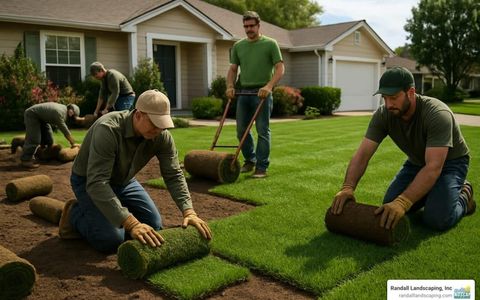
Sod Installation: Complete Guide to Creating a Healthy and Beautiful Lawn
Updated: October 29, 2026
Read More